Investing in a CNC machine is a of the most impactful decisions a small business owner can make. Whether you run a woodworking shop, a metal fabrication studio, or a home-based craft business, computer numerical control technology can transform raw materials into precision products at a speed and consistency that manual tools simply cannot match. The global CNC machine market is valued at over $100 billion and is projected to nearly double by 2032, driven by automation demand across automotive, aerospace, medical, and consumer goods sectors. That growth reflects a broader shift: businesses of every size are adopting CNC to stay competitive.
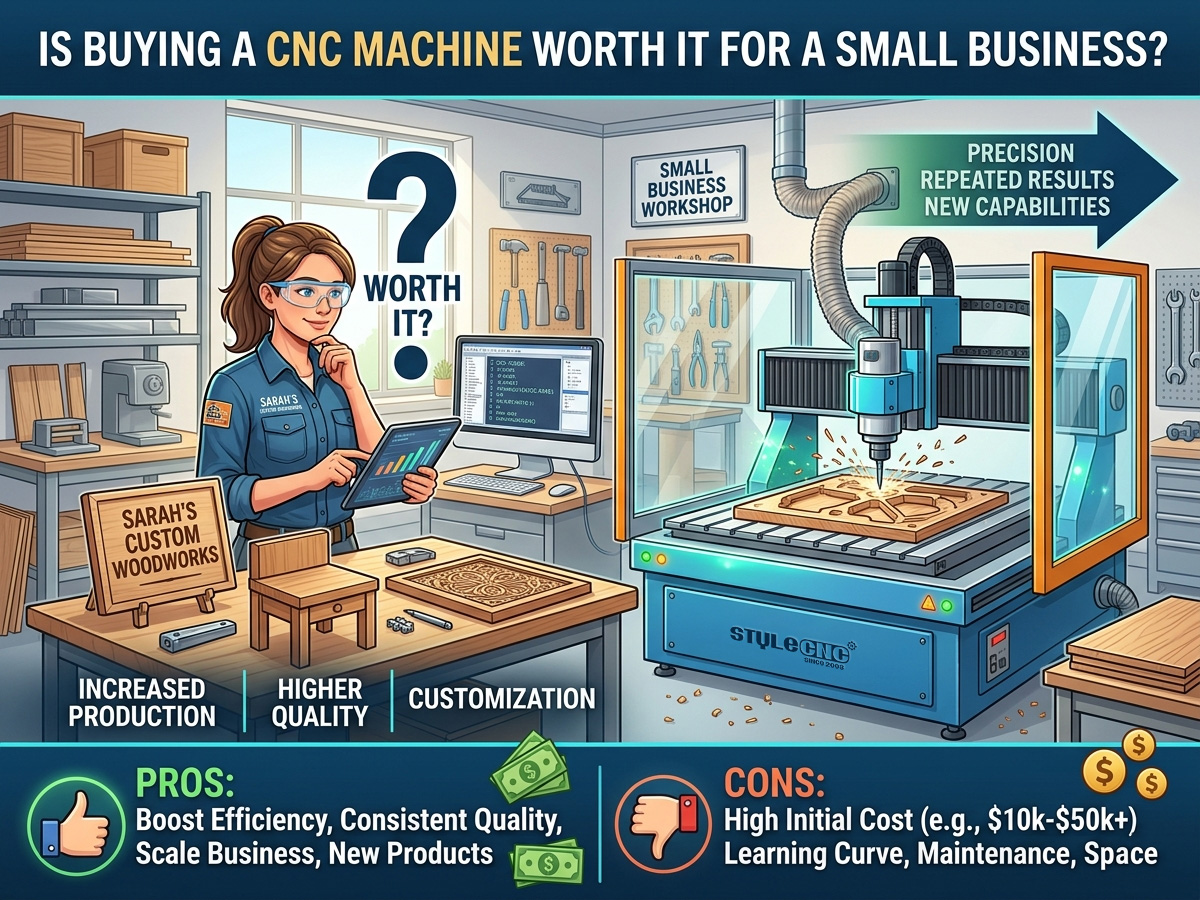
But the question remains practical. Is a CNC machine a good investment for your specific situation? This guide breaks down the real costs, profit potential, income benchmarks, and strategic considerations so you can make an informed decision before committing capital.
What Does a CNC Machine Actually Do for a Small Business?
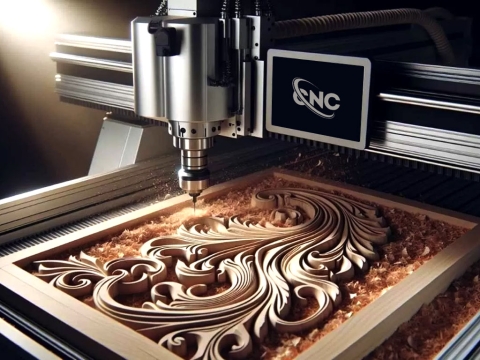
A CNC machine reads digital design files and translates them into precise physical cuts, carvings, engravings, or welds on materials like wood, metal, acrylic, stone, and plastics. For a small business, this means you can produce everything from custom furniture components and signage to industrial parts and personalized gifts, all with repeatable accuracy and minimal manual intervention.
The practical advantages for small operations include batch consistency (every piece matches the digital file), rapid prototyping for new product ideas, and the ability to fulfill custom orders without hiring specialized skilled labor for each task. A single CNC router for small business can handle sign-making, cabinetry components, 3D carvings, and decorative panels, effectively replacing 3 or 4 manual processes.
How Much Does It Cost to Start a CNC Machine Business?
Startup costs vary widely based on the type of CNC equipment, workspace requirements, and the scale of operations you intend to launch. Below is a realistic cost breakdown for common entry points:
| Rodzaj działalności | Koszt wyposarzenia | Total Startup | Najlepsze dla: |
|---|---|---|---|
| Home-Based Hobby CNC | $ 2,000 - $8, 000 | $ 3,000 - $12,000 | Etsy sellers, craft makers, side hustles |
| Mały warsztat | $ 8,000 - $30,000 | $ 15,000 - $50,000 | Custom signs, furniture, small-batch parts |
| Professional Machine Shop | $ 30,000 - $100,000 + | $ 60,000 - $200,000 + | Contract manufacturing, industrial parts |
| Laser Cutting Studio | $ 3,000 - $50,000 | $ 6,000 - $70,000 | Engraving, cutting, marking services |
Total startup costs include not just the machine itself, but software licenses (CAD/CAM packages), tooling and bits, dust collection or fume extraction, workspace modifications, and initial raw materials. For a detailed pricing analysis, explore the full Przewodnik po kosztach routera CNC to compare models across budget tiers.
Is a CNC Business Profitable? Real Earnings Data?
The short answer is yes, but profitability depends on your niche, pricing discipline, and how efficiently you keep your machine running. Industry data shows that well-managed CNC operations achieve the following benchmarks:
| metryczny | Small/Home Shop | Sklep Profesjonalny |
|---|---|---|
| Annual Revenue (per machine) | $ 30,000 - $80,000 | $ 150,000 - $400,000 |
| Marża zysku brutto | 20% - 40% | 20% - 50% |
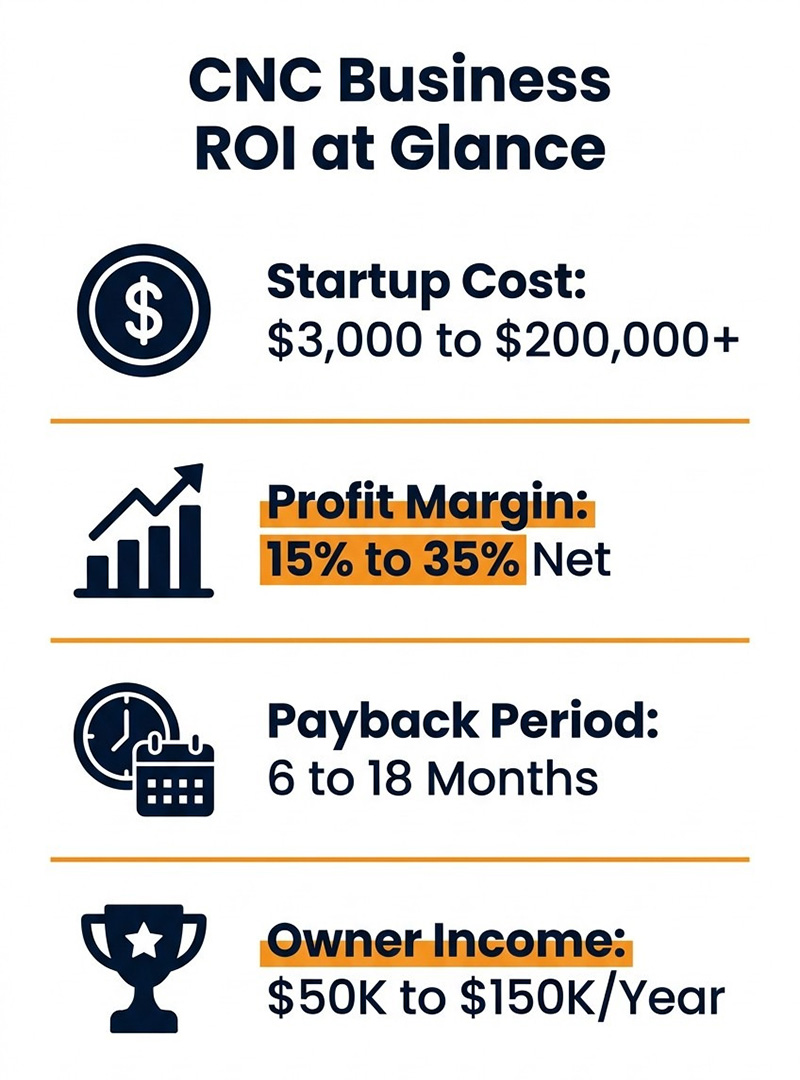
| Marża zysku netto | 10% - 25% | 15% - 35% |
| Typowy okres zwrotu | 6 - miesiąc 18 | 2 - lata 5 |
| Owner Annual Income | $ 30,000 - $70,000 | $ 50,000 - $150,000 + |
CNC machine shop owners in the United States earn between $50,000 i $150,000 annually, depending on shop size, geographic location, specialization, and level of automation. Operators working in aerospace and medical device niches consistently report the highest margins because these sectors demand tight tolerances and rigorous documentation, creating natural barriers to low-cost competition.
For those evaluating whether a router specifically justifies the investment, this CNC router ROI analysis covers the break-even math in detail.
Most Profitable CNC Projects for Small Businesses
Not all CNC work generates equal returns. The most profitable projects combine high perceived value, low material cost, and strong market demand. Based on current sales data from platforms like Etsy, Amazon Handmade, and direct B2B channels, these categories consistently deliver the best margins:
| Kategoria projektu | Średnia cena sprzedaży | Koszt materiału | Marża zysku |
|---|---|---|---|
| Custom Wood Signs | $ 50 - $300 | $ 5 - $30 | 60% - 80% |
| Personalized Cutting Boards | $ 40 - $120 | $ 8 - $20 | 55% - 75% |
| Custom Furniture Parts | $ 200 - $2, 000 + | $ 40 - $400 | 40% - 60% |
| Części do obróbki metalu | $ 100 - $5, 000 + | $ 20 - $1, 000 | 30% - 50% |
| Laser-Engraved Gifts | $ 15 - $80 | $ 2 - $10 | 70% - 85% |
| 3D Carvings & Relief Art | $ 100 - $500 | $ 10 - $50 | 65% - 80% |
Entrepreneurs exploring laser-based income streams can review the complete guide to starting a laser cutting business for equipment selection, pricing strategies, and client acquisition frameworks.
Key Factors That Determine CNC Investment ROI
Several variables directly affect whether your CNC machine becomes a profit center or a depreciating asset collecting dust. Understanding these factors before you buy is critical:
Wskaźnik wykorzystania maszyn
The single biggest predictor of profitability. Shops that keep their CNC running 40+ hours per week break even faster. Target at least 50% to 65% utilization of available machine hours to cover overhead and generate profit.
Wybór nisz
Commodity job shops compete almost entirely on price. Businesses that specialize, whether in aerospace components, custom cabinetry, architectural millwork, or personalized consumer products, command higher prices and face less competition.
Polityka cenowa
Underpricing is the most common failure mode for new CNC businesses. Your rate must cover machine depreciation, tooling wear, material waste, setup time, design time, overhead, and a healthy profit margin. A typical CNC shop rate ranges from $50 się $120 per hour for design and machining combined.
Material Sourcing and Waste Management
Buying raw materials in bulk, nesting parts efficiently in your CAM software, and repurposing offcuts into smaller products all contribute to margin improvement over time.
CNC Machine Types: Choosing the Right One for Your Business
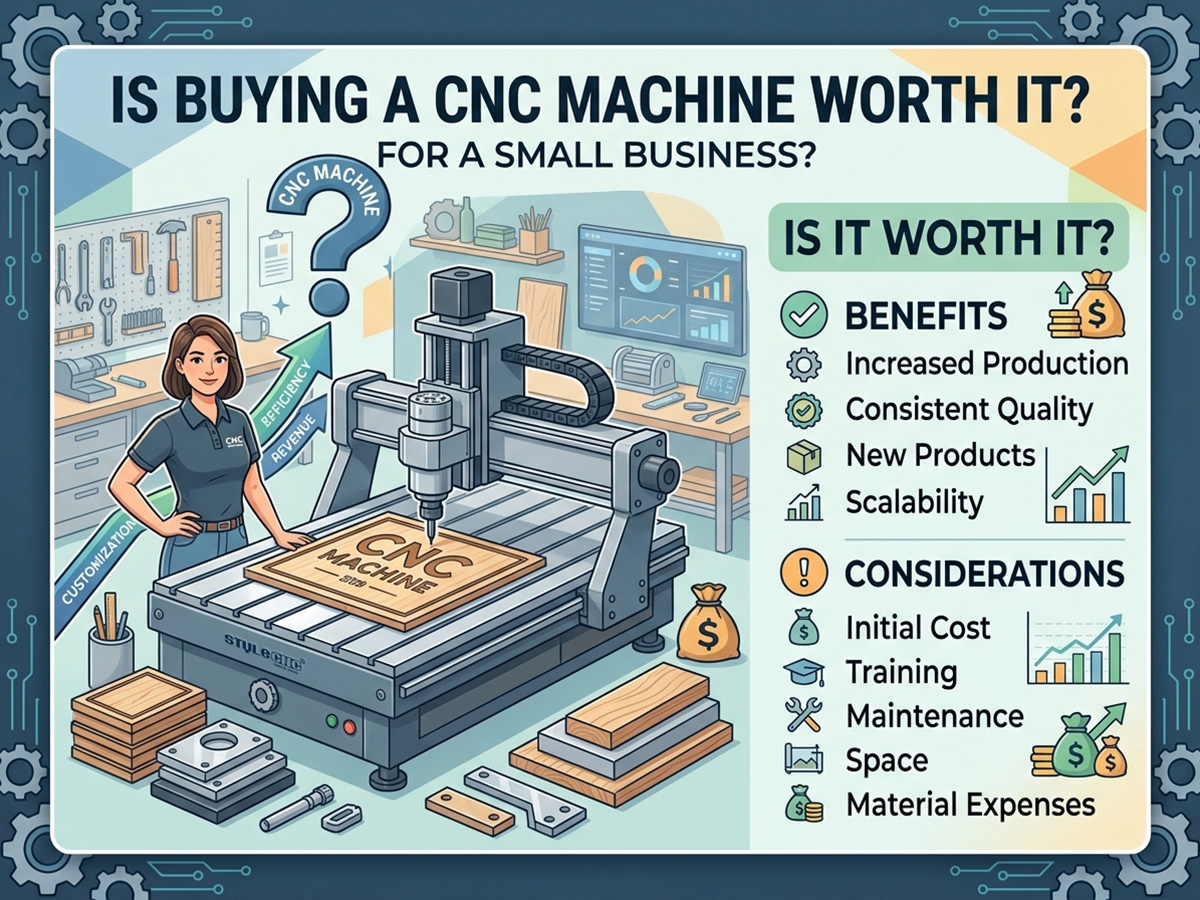
Selecting the right CNC equipment is the foundation of a successful operation. Each machine type serves different materials, industries, and price points:
| Typ maszyny | Przedział cenowy | Najlepsze materiały | Idealne aplikacje |
|---|---|---|---|
| Frezarka CNC | $ 2,000 - $80,000 | Wood, MDF, acrylic, foam, soft metals | Furniture, signs, cabinetry, 3D rzeźby |
| Grawer laserowy | $ 300 - $30,000 | Wood, leather, glass, acrylic, coated metal | Personalization, gifts, branding, prototypes |
| Wycinarka laserowa światłowodowa | $ 15,000 - $300,000 + | Stal, aluminium, miedź, mosiądz, tytan | Sheet metal parts, industrial fabrication |
| Plasma Cutter | $ 5,000 - $60,000 | Mild steel, stainless, aluminum (thick) | Metal art, structural parts, farm/ranch |
| Frezarka CNC | $ 8,000 - $150,000 + | Metale, tworzywa sztuczne konstrukcyjne | Precision parts, prototyping, tooling |
First-time buyers should start with the complete CNC router buying guide to understand frame rigidity, spindle power, control systems, and software compatibility before comparing specific models.
Step-by-Step: How to Start a Small CNC Business
Launching a CNC business requires a structured approach. Follow these steps to minimize risk and accelerate your path to profitability:
Step 1. Research your local market. Identify which industries near you need CNC services. Signage companies, cabinet shops, metal fabricators, and event planners are common 1st clients.
Step 2. Choose a niche before choosing a machine. Your target market determines the machine type, bed size, spindle power, and software stack you need.
Step 3. Calculate total cost of ownership. Factor in tooling, software, materials, maintenance, dust collection, power, and workspace rent beyond the machine price alone. Refer to the CNC woodworking machine cost breakdown for detailed figures.
Step 4. Build a portfolio before launching. Create 10 to 15 sample products that showcase your machine's capabilities. Photograph them professionally for your website and social channels.
Step 5. Set profitable pricing from day one. Calculate your shop rate by dividing all monthly overhead by available production hours, then adding your target margin.
Step 6. Invest in marketing and digital presence. A professional website, local SEO, Google Business Profile, and marketplace listings on Etsy or Amazon Handmade drive initial order flow.
Step 7. Scale with automation. As volume grows, add automatic tool changers, batch processing workflows, and nesting software to increase throughput without proportionally increasing labor.
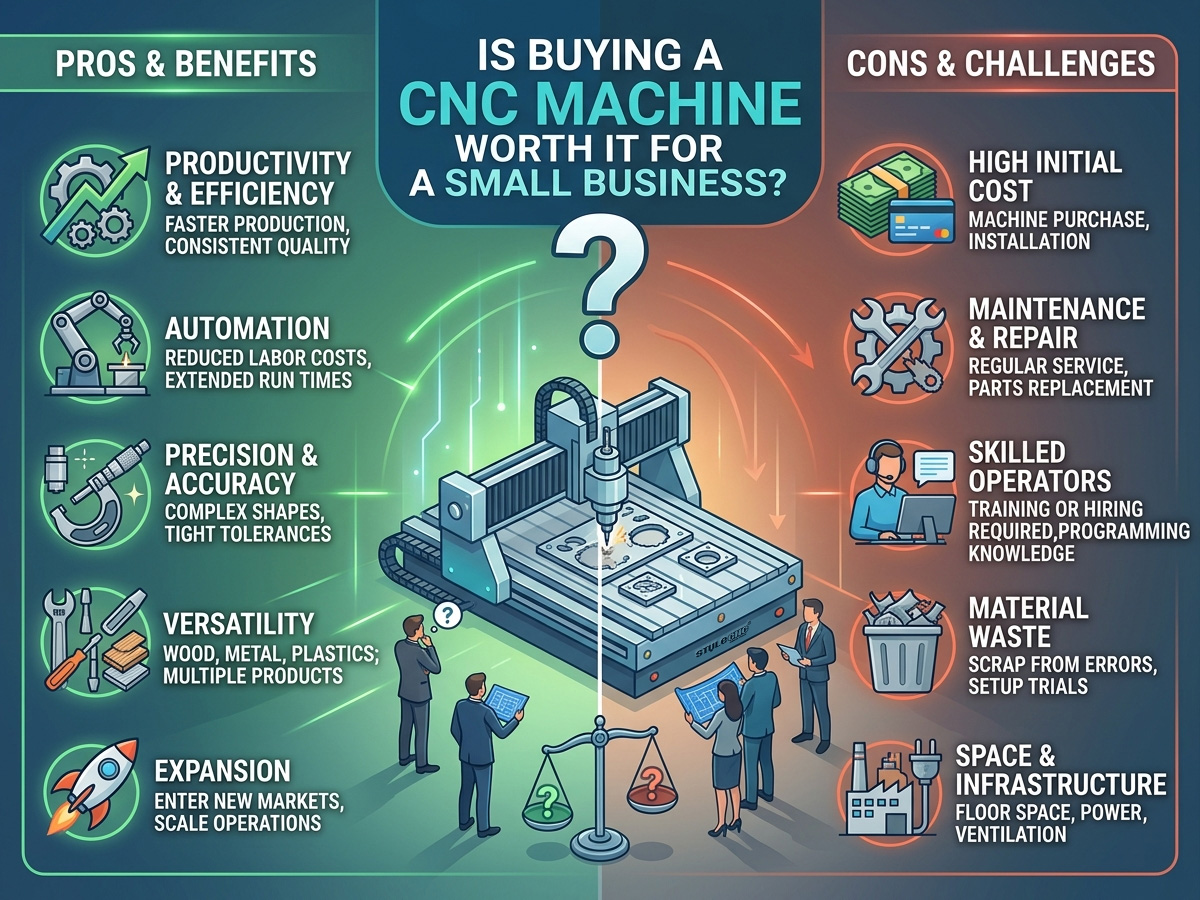
Pros and Cons of Buying a CNC Machine for a Small Business
| ✔ Zalety | ✘ Wyzwania |
|---|---|
| • Produces identical parts with sub-millimeter accuracy every run | • Significant upfront investment for quality equipment |
| • Reduces labor dependency and speeds production 3x to 10x vs. manual | • Learning curve for CAD/CAM software and machine operation |
| • Enables custom product offerings at premium price points | • Ongoing costs for tooling, maintenance, and material |
| • Machines can run unattended with proper setup and safety | • Requires dedicated workspace with power and ventilation |
| • Opens access to B2B contract manufacturing income | • Market research needed to avoid overcrowded product niches |
When Buying a CNC Machine Is (and Isn't) Worth It?
A CNC investment makes strong financial sense when:
✔ You already have a product idea or client base that requires precision manufacturing
✔ You are spending over $500/month outsourcing CNC work to third-party shops
✔ Your current manual production methods create bottlenecks that limit revenue growth
✔ You can realistically commit 20+ hours per week of machine run time
✔ You are willing to invest 3 to 6 months in learning CAD/CAM and machine operation
Consider delaying the purchase if:
• You have no clear market or customer base identified yet.
• Your projected monthly production volume would leave the machine idle 80%+ of the time.
• Your available budget only covers the machine but not tooling, software, and materials.
CNC Market Outlook: Why Now Is a Good Time to Invest
The global CNC machine market is experiencing sustained growth driven by manufacturing automation, reshoring initiatives, and expansion in electric vehicle, aerospace, and medical device production. Industry analysts project the market to grow from approximately $101 billion in 2025 to over $195 billion by 2032, reflecting a compound annual growth rate near 10%. North America is emerging as the fastest-growing region, fueled by domestic manufacturing incentives and smart factory adoption.
For small business owners, this macro trend translates into increasing local demand for precision parts, prototyping services, and custom manufacturing. Businesses that establish CNC capabilities now position themselves to capture work as supply chains continue to localize and larger manufacturers seek reliable small-shop partners for overflow production and specialized short-run orders.
Final Verdict: Should You Buy a CNC Machine?
A CNC machine is a of the most productive capital investments a small business can make, provided you approach it with a clear market focus, realistic cost expectations, and commitment to learning the technology. The data supports strong returns: typical payback within 6 to 18 months for small shops, net profit margins of 15% to 35% for well-run operations, and growing market demand across virtually every manufacturing sector.
Start by defining your niche, calculating your total cost of ownership, and building a small portfolio of sample products. Then select a machine that matches your specific production needs and budget. With disciplined pricing and consistent marketing, a CNC business can deliver financial independence and creative fulfillment for years to come.
Ready to choose your 1st CNC machine? Explore the full STYLECNC katalog produktów to compare routers, lasers, plasma cutters, and milling machines with free expert consultation and worldwide shipping.